Activating Fluxus
news | EVENTS | writings
-

Processing Fluxus and Media Art Histories: A Case Study of the John G. Hanhardt Archives, by Hannah Mandel
Authored by the Archivist at the Center for Curatorial Studies at Bard College, in Annandale-on-Hudson, NY, Hannah Mandel the paper “Processing Fluxus and Media Art Histories: A Case Study of the John G. Hanhardt Archives at the Center for Curatorial Studies at Bard College” was presented at the 112th College Art Conference in Chicago within…
-
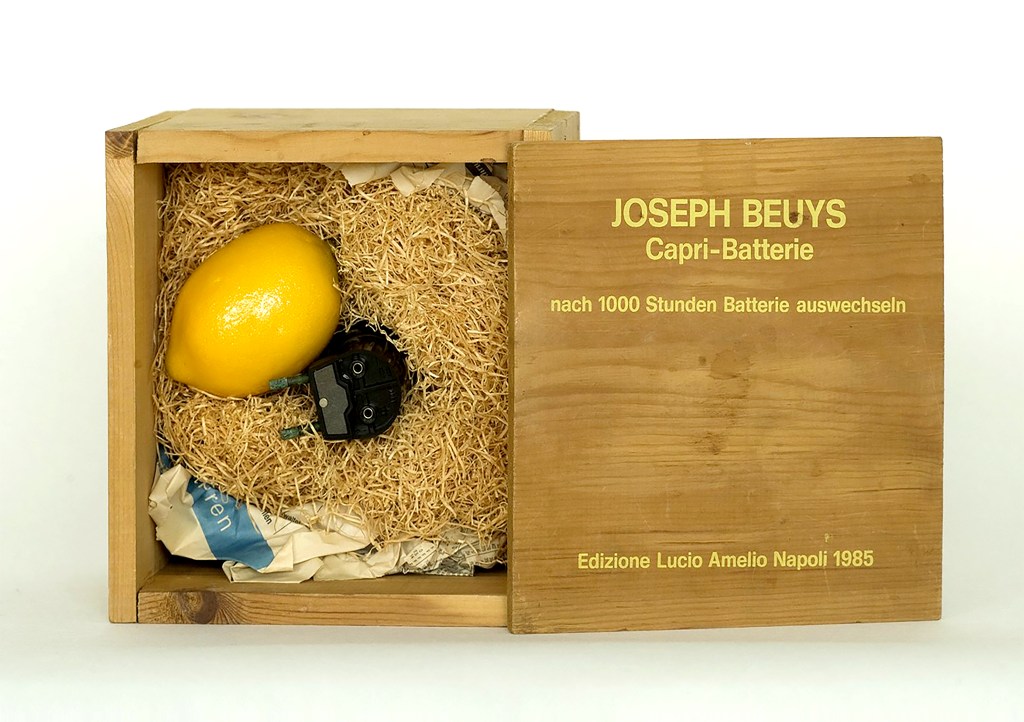
Capri Battery: Powering Decolonial Display Practices through Multisensory Interaction, by Inbal Strauss
Here is a highly original and engaging script by scholar and practice-based researcher Inbal Strauss that addresses Beuys’ Capri Battery and argues that, as a design object, it helps decolonize the pervasive visualist paradigm of aesthetic reception.
-
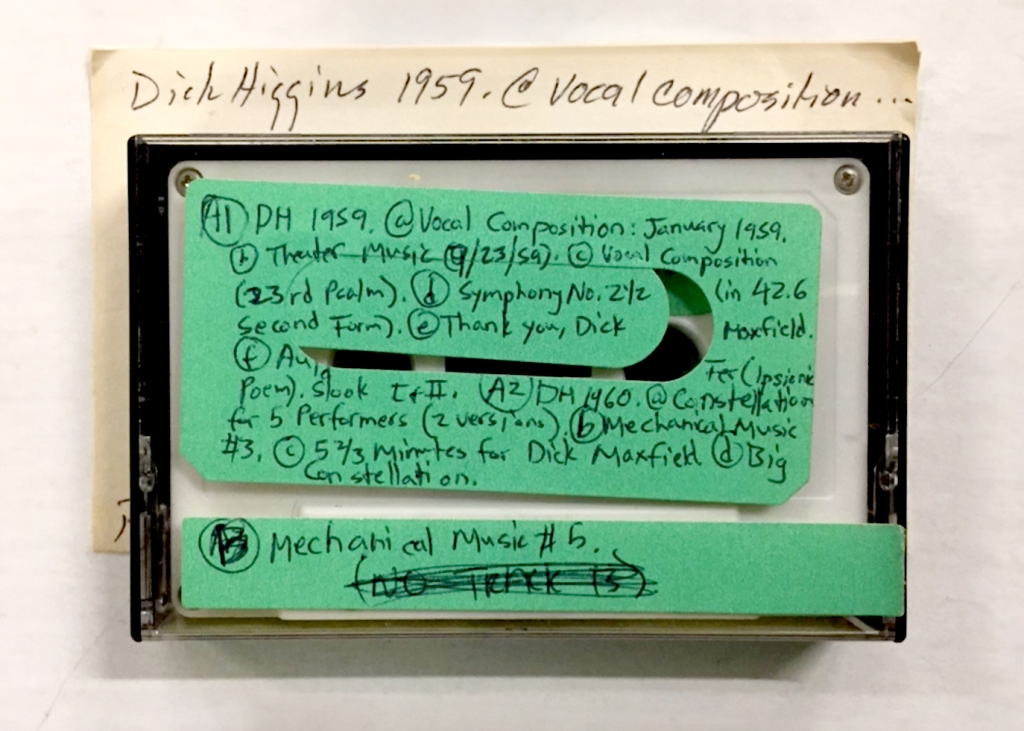
“… treating with a flux”: Case Studies from The Silverman Fluxus Collection at MoMA, by P. Oleksik, K. Lewis, and D. Johnson
“…Treating with a Flux”: Case Studies from The Silverman Fluxus Collection, at The Museum of Modern Art, was authored by Peter Oleksik, Kate Lewis, and Danielle Johnson. It was presented at the 112th College Art Conference in Chicago. Below, you may find a recording of their presentation, which has been amended for our website.
ABOUT OUR PROJECT, IN BRIEF
This research project, which has been funded by the Swiss National Science Foundation at Bern University of the Arts, investigates the objects, events, scores, and ephemera that emerged in the spirit of Fluxus in the 1960s–70s in Switzerland, Europe, the UK, and the USA. Inherently fluctuating by definition, Fluxus rejects any stable, material form. Considering the transitory aspects of Fluxus forms not destined for preservation, and looking through a multidisciplinary lens of conservation, art history, performance studies, heritage studies and museology, our project will advance novel strategies for activating Fluxus through the reconstruction, adaptation and artistic reinterpretation of Fluxus forms.
AIMS AND MEANS
The project has three principal aims : (I) Using examples of collections and individual artworks held in Switzerland and abroad, the project reviews, catalogues, evaluates and systematises the current strategies for exhibiting, conserving and documenting Fluxus. (II) By means of a theoretical investigation of the notions of authenticity, changeability and intentionality and the role they play in the continuing life of Fluxus intermedia, (III) the project advances new strategies for activating Fluxus works through (a) the reconstruction, (b) the adaptation and (c) the artistic reinterpretation of Fluxus forms.

IN DETAIL
Activating Fluxus centers on the lives and afterlives of Fluxus objects, events, and ephemera created in the 1960s–70s in Switzerland, Europe, the UK, and the US. Fluxus transformed creative practice for good, not least by questioning the dominant preconception of the artwork as something that endures unchanged. Inherently fluctuating by definition, the creative outputs of Fluxus reject any stable, material form. While many histories of the post-war avant-garde focus on the implications of nascent conceptualism and performativity for other artistic genres, the proposed project considers the fundamentally transitory aspects of Fluxus forms not destined for preservation. By seeking new ways to engage with the legacy of Fluxus through the lens of conservation, art history, performance studies, heritage studies and museology, this project examines the possibility of activating Fluxus, challenged as it is by its paradoxical coexistence of ephemerality and materiality, with implications for how we conceive of changeable artworks that emerged after the 1960s.

