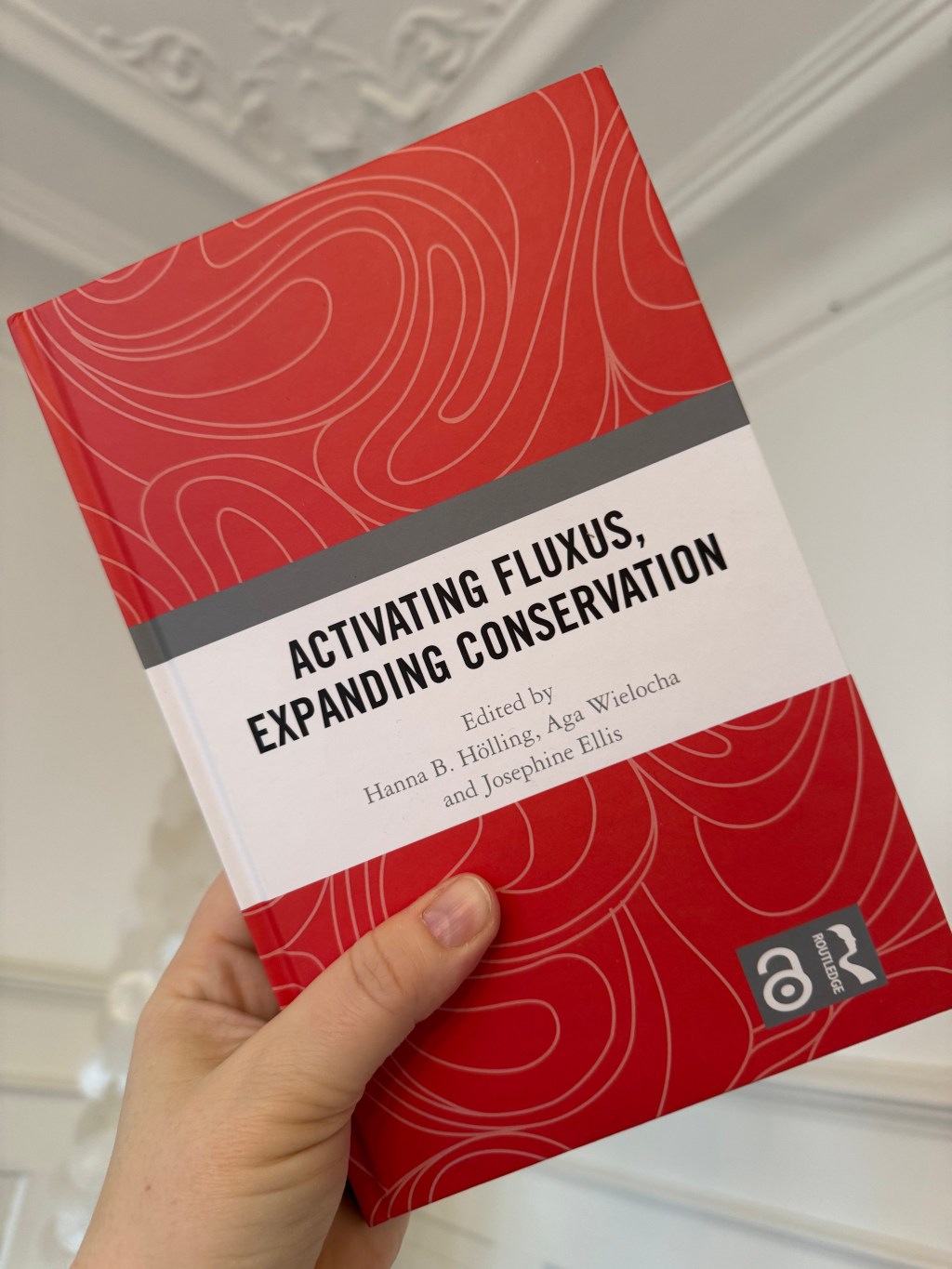
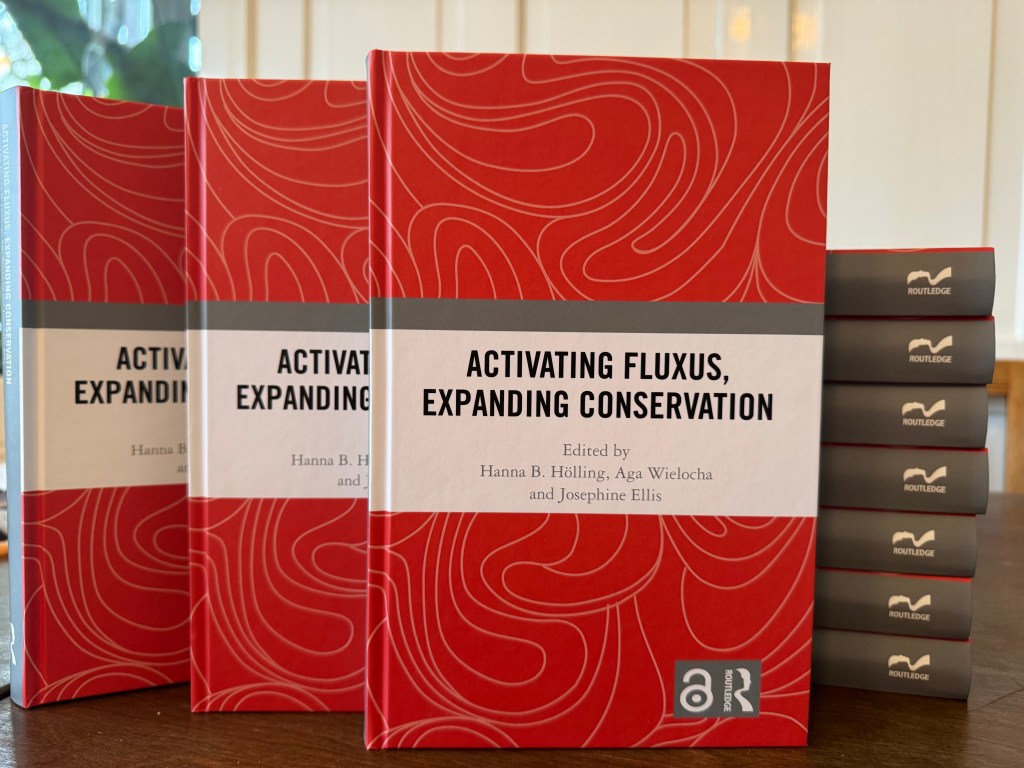
Holding the finished book in our hands feels a bit unreal. Activating Fluxus, Expanding Conservation has officially landed, and seeing it materialize after years of thinking, writing, debating, and activating Fluxus is incredibly moving.
This is the first book to focus explicitly on the care and preservation of Fluxus works, reimagining the afterlife of Fluxus by positioning conservation as an evolving, interpretive, and generative practice. Rather than treating Fluxus as something to be fixed or stabilised, the volume insists on conservation as activation—a mode of care that recognises matter as already active, vibrant, and generative, while at the same time keeping works alive through interpretation, participation, and repetition.
Fluxus radically transformed artistic practice by challenging the entrenched preconception that artworks endure, unchanged and confined to a singular physical manifestation. Bringing together artists, scholars, conservators, and curators from diverse cultural and theoretical perspectives, the book explores how Fluxus’s ephemeral, participatory, and intermedial practices demand an expanded vision of conservation—one that is critical, productive, creative, decolonial and future-oriented. As a result, Fluxus emerges not as a closed historical movement, but as a living force, continually remade through acts of care.
Huge thanks and deep gratitude to all the authors: Eric Andersen, Bengt af Klintberg, Kit Brooks, Philip Corner, Josephine Ellis, Ken Friedman, Marcus Gossolt, Johannes M. Hedinger, Hannah B Higgins, Maggie Hire, Rasmus Holmboe, Danielle Johnson, Magnus Kaslov, Sally Kawamura, Kate Lewis, Ann Noël, Émilie Parendeau, Patrizio Peterlini, Peter Oleksik, Mieko Shiomi, Inbal Strauss, Ben Vautier, Aga Wielocha, and to my co-editors for the joy of thinking together.
Join us for a book presentation during our “Activations: A Fluxus Symposium” on Friday, February 27, 14:45 CET.
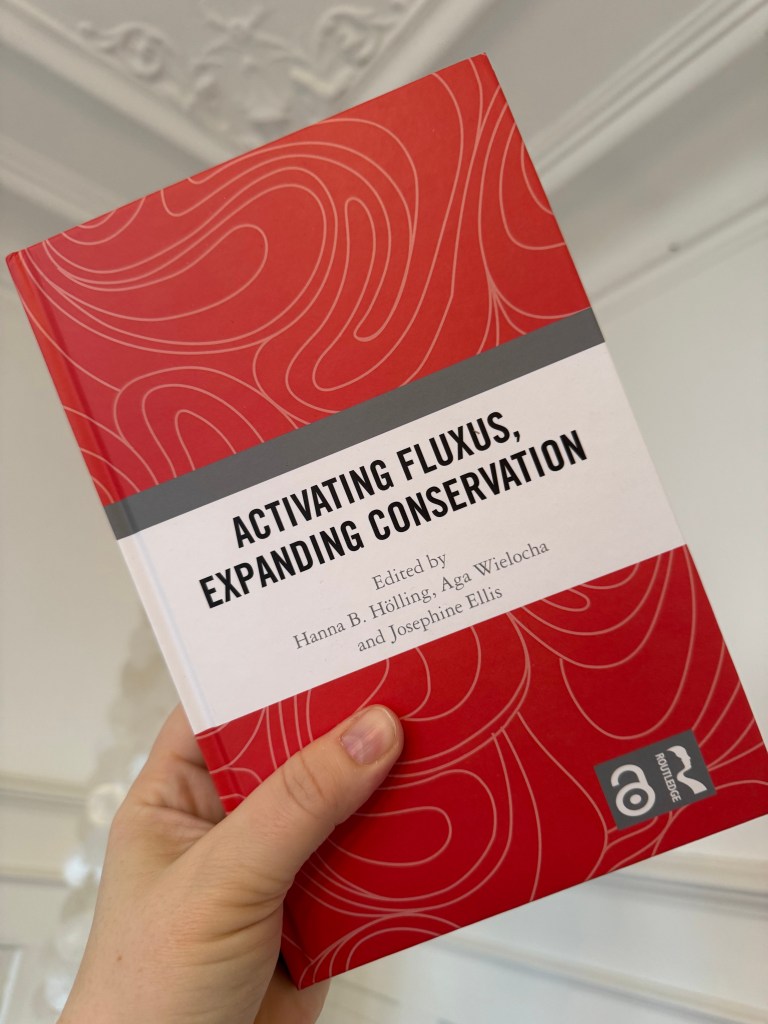
 Activating Fluxus