
This post offers a glimpse into my recent contribution to the Lexikon der Lebensmittel als Kunstmaterial [Von Apfel bis Zucker] (Engl. Lexicon of Food as Artistic Material [From Apple to Sugar]), edited by Ina Jessen and Fabiana Senkpiel. Originally published in German by Hatje Cantz Verlag.

Silbergelatineabzug. The Gilbert and Lila Silverman Fluxus Collection Gift. Repoduced from the essay.
An enigma surrounds Flux Mystery Food, which first appeared as canned food presented by the French artist Ben Vautier at the Fluxus Festival in Nice in 1963. A black-and-white documentary photograph captures Vautier consuming the contents of an unlabelled can— a unique and somewhat forgotten event, allegedly followed by him brushing his teeth [Image 1]. Whether appropriated for economic or aesthetic reasons, these unlabelled cans of food offered an intriguing experience. They emphasized gustatory perception, revealing their contents only upon consumption and thereby subverting the dominance of visuality.
The story of Flux Mystery Food can only be deduced from a few accounts. According to Hannah B Higgins, in 1963, Vautier purchased “unlabelled cans of identical size in the grocery store and ate whatever was inside them—whether lychee nuts (as at the first performance) or salmon, canned sausages or sauerkraut.”[1] On Vautier’s request, only later labelled by George Maciunas “Flux Mystery Food” [Image 2], the riddle of canned food has since epitomized the Fluxus works’ multisensorial character. Rather than solely visual and perceived from a centred perspective by a disembodied beholder, Flux Mystery Food required of the spectator-recipient an active attitude—participation, activation and interpretation of the contents of the metal can. Today, the “container” of Flux Mystery Food also partakes of the aesthetics of enclosures so characteristic of the institutionalization and musealization of Fluxus.
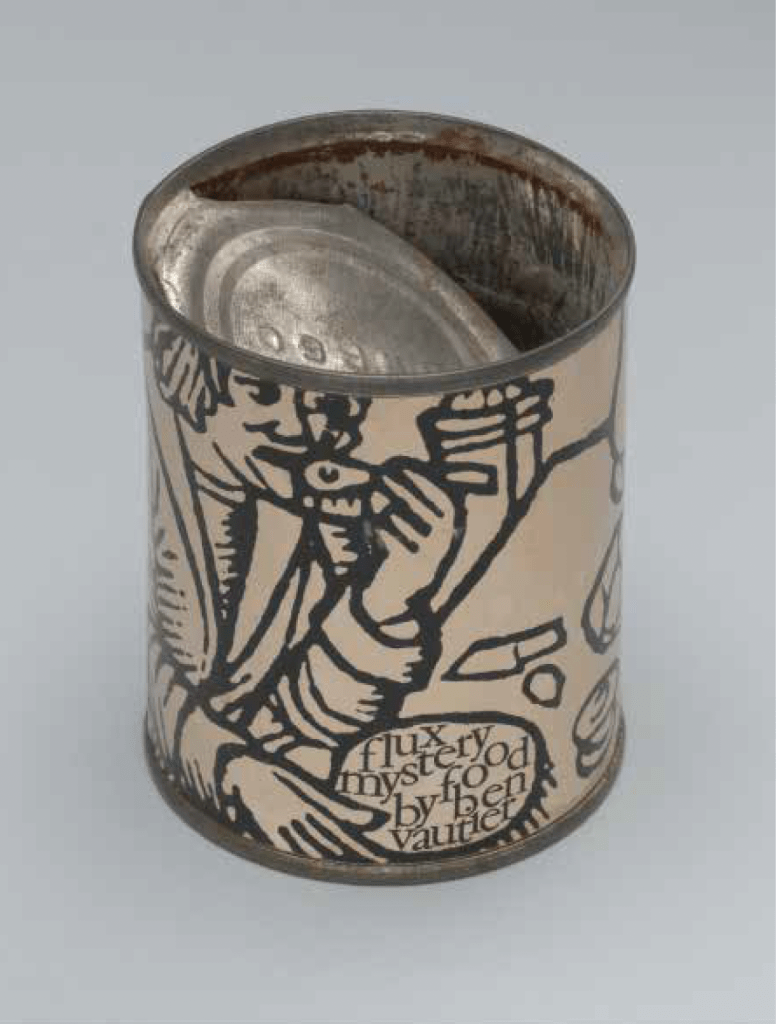
Image 2: Ben Vautier, Flux Mystery Food, 1967, Metalldose mit Offset-Etikett.
The Gilbert and Lila Silverman Fluxus Collection Gift. Reproduced from the essay.
Although not always immediately readable as such, the “artefacts” of the 1960s and ‘70s displayed today in vitrines of various collections have often not been conceived as autonomous objects. Rather, like Flux Mystery Food, they have been constituent parts of concluded performances. It is unclear when, in the case of Flux Mystery Food, the performance of eating the unlabelled cans receded to give way to a more static presentation. Potential factors leading to this status quo might have been either the incorporation of the cans into the collections or the reluctance, on the part of the receiver/the beholder of the work, to consume their aged contents. Because the gustatory and olfactory perceptions that inhere in the “consumption” of any food art (the Nice festival’s event being an example) were not guaranteed in the later Flux Mystery Food cans (one of the reasons being that the work became editioned and thus its realization as a performance was no longer in the artist’s hands), the Flux Mystery Food could only conceal what it conserved. In the words of Ken Friedman, “the actual food in a can of Fluxus Mystery Food was a bit like the cat in Schrodinger’s thought experiment. Until the can is closed, the food can be anything. Once the can is opened, it takes on a concrete identity, and it is no longer mystery food.”[2]
The unopened Flux Mystery Food entices imagination and creates an anticipation of what might, indeed, be found inside, and in what condition. Not unsimilar to Piero Manzoni’s notorious Merda del Artista (1961)—the can filled with the artist’s faeces “conserved naturally”—the contents of Flux Mystery Food can only be guessed by a direct examination: touching, shaking, and accessing the can’s weight and the consistency—slight nervousness notwithstanding in the not improbable scenario when the metal enclosure incidentally gives in. The gustatory excitement increases the more one speculates what is hidden and what might unfold.
But the idea of purchasing unlabelled cans by thrifty consumers has been widely practiced inside and outside the artistic circles (see the cartoonist John Kricfalusi’s biographic illustrated accounts[3]). Drawn to processed food, Maciunas himself—committed to a living at economic limits, or even on the brink of financial collapse— used to buy and consume, from discounters’ shelves, large quantities of cans whose labels were missing.
Flux Mystery Food is neither a unique phenomenon amongst the food art generated by Fluxus, nor is it the last mysterious work in Vautier’s oeuvre (Vautier produced a series of mystery works such as, among others, an envelope included in Fluxus I (1964) containing black offset print on blue cardboard and concealing a blue card stating, “NO MYSTERY.”)[4]
In the mission to render the elitism and preciousness of art obsolete, Fluxus artists realized their avant-garde intention to merge art and everyday life in a wide palette of meals and dishes, using food as a medium.[5] Employed with the awareness of the process of consumption, degradation and decay, the canonical “Fluxfoods” include works by John Chicks, Maciunas, Benjamin Patterson, Takako Saito, Daniel Spoerri, Vautier, and Robert Watts. Not exactly food art, but rather a leftover from Maciunas’ avant-garde anti-diet, the collection of food containers from his consumed, often identical, meals in One Year (1973-1974), manifest the way in which the habitual—the ritual act of taking a meal—leaked into the aesthetics.
Not only did Fluxus generate one of the most fascinating food arts in the history of the 20th century avant-garde, but also established eating practices as sociality and conviviality, an occasion on which the wider social circles of Fluxus gathered, talked and celebrated the everyday. Among these events were Alison Knowles’ Identical Lunch(es) and George Maciunas’ themed banquets. Possibly taking inspiration from Spoerri’s extant culinary experiments,[6] these banquets were organized as “monomeals” that utilized either only one ingredient, e.g. eggs or fish, or they were composed of transparent foods or of dishes maintained in one colour.[7] Preceding by decades the relational aesthetics[8] and metabolized, as David Joselit puts it, both in the bodies and in consumer networks, Fluxus food became a post-Duchampian bio-readymade to be consumed in an everyday ritual.[9]
Against the belief that food conservation provides a stable artefact, Flux Mystery Food only apparently might be regarded as docile, fixed and well conserved matter. Whether considered art or culinary culture, the contents of such edible objects, if kept too long in storage, might corrode the can and contaminate their immediate surroundings with their smelly, sticky expulsion. The processes of aging and decay, which are intrinsic factors of all works of art and material culture, impact the way in which the cans interact with their environment. A story has it that a food can from the Fluxus collection at the Getty Research Institute—a can of sardines which necessarily lacked an expiration date— needed to be replaced due to its corroded, ready-to-burst character.[10] An event like this can only be imagined: A work spreading its toxic, aged, and reeking contents over its surroundings (other works!)— a convulsion of degradation, decay and age, and an evidence of conservation’s fallacy in purporting to keep things stable. Here is the programmatic Fluxus outpour—an unstoppable discharge and flux at its best.
Hanna B. Hölling. “Fluxus Mystery Food by Ben Vautier.” In Lexikon der Lebensmittel als Kunstmaterial, edited by Fabiana Senkpiel and Ina Jessen, Berlin: Hatje Cantz, 2024.
Continue reading the article in German here or purchase this book.
[1] Hanna B Higgins, Fluxus Experience, Berkeley: University of California Press, 2000.
[2] Author’s email correspondence with Ken Friedman, August 21, 2022. Though an argument might be made that the visibility of food does not necessarily reveal its full identity.
[3] Randy Ludacer, “Cans without Labels,” Beach Packing Design, …..
[4] George Maciunas, ed. Fluxus I (New York: Fluxus, 1964). Vautier also endured a 24-hours performance spent in a nailed box that offered yet another variation on the theme of mystery. Rolf Beil, Künstlerküche: Lebensmittel als Kunstmaterial -von Schiele bi Jason Rhoades. Köln: DuMont 2002, 124.
[5] See Hanna B Higgins, “Food, The Raw and the Fluxed,” in Fluxus and the Essential Questions of Life, edited by Jacquelyn Bass, 13-21, Chicago and London: Chicago University Press and Hood Musuem of Art, XXX), 13; Natilee Harren, “The Eternal Metabolic Network: Fluxus, Food, and Ecofeminism,” in Living Matter: The Preservation of Biological Materials in Contemporary Art, Proceedings from a Conference Held in Mexico City, June 3-5, 2019, edited by Rachel Rivenc, Kendra Roth. Los Angeles: Getty Conservation Institute, 2022. https://www.getty.edu/publications/living‑matter/
[6] John Hedricks, “Daniel Speori,” in Ubi Fluxus Ibi Motus, 1990-62, edited by Achille Bonito Oliva (Venezia and Milan: Edizioni Mazotta, 1990),262 translated from French in David Joselit, “The Readymade Metabolized: Fluxus in Life,” RES: Anthropology and Aesthetics 63/64, Wet/Dry (Spring/Autumn 2013):193.
[7] Cecilia Novero, Anti-diets of the Avant-Garde: From Futurist Cooking to Eat Art (Minneapolis: University of Minnesota Press, 2010), 241; Higgins, Fluxus Experience, 47.
[8] Coined by art critic, historian and curator Nicolas Bourriaud, “relational aesthetics” is a term …
[9] Joselit, “The Readymade Metabolized.”
[10] Marcia Reed, „Killing with Kindness? The Challenges of Conservation and Access for Living Matter,” in Living Matter: The Preservation of Biological Materials in Contemporary Art, Proceedings from a Conference Held in Mexico City, June 3-5, 2019, edited by Rachel Rivenc, Kendra Roth. Los Angeles: Getty Conservation Institute, 2022. https://www.getty.edu/publications/living‑matter/; Albrecht Gumlich,“Hooked (1980) by Ben Patterson,“ Interview with Aga Wielocha and Hanna Hölling, Radio Fluxus, Episode 1, https://activatingfluxus.com/radio-fluxus/. My sincere thanks to Aga Wielocha for drawing my attention to the missing date.
 Activating Fluxus