
by Sally Kawamura
‘Open something which is closed’
instructs Mieko Shiomi in her Spatial Poem (1965-1975). This series contains nine events, completed over the ten-year period and involves over two hundred participants from various international locations.
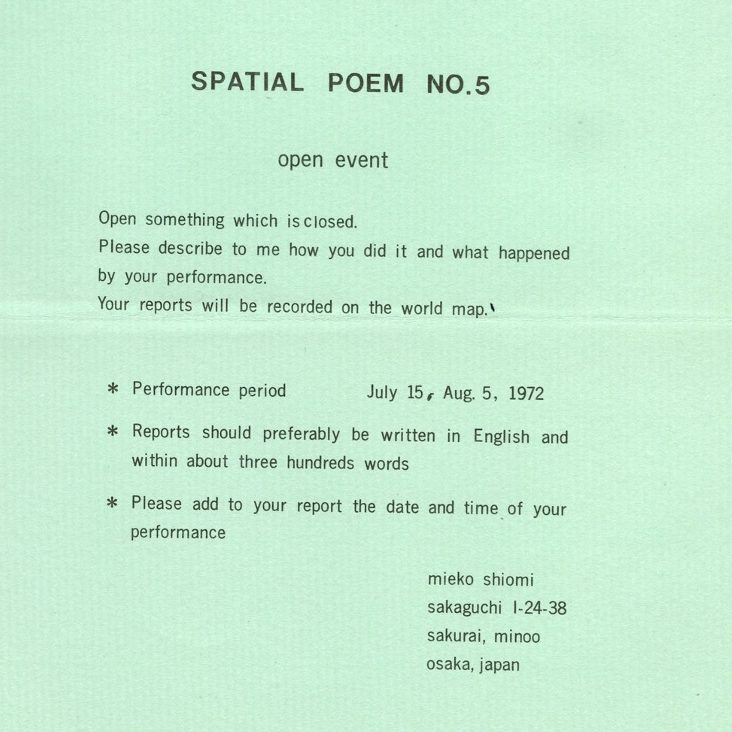
Like many other of Shiomi’s events, there is a significant element of choice in how to go about the instruction, and the reports reflect the similarities and differences between the participants. There are instances, for example, of eyes being opened; letters being opened; doors and windows being opened, but each experience is unique. While Per Kirkeby tells us what his letter says, Herman Damen gives his post to the dog. While Jan Erik Vold writes a poem about opening eyes to behold darkness, Carla Liss sees a postcard of the sea.

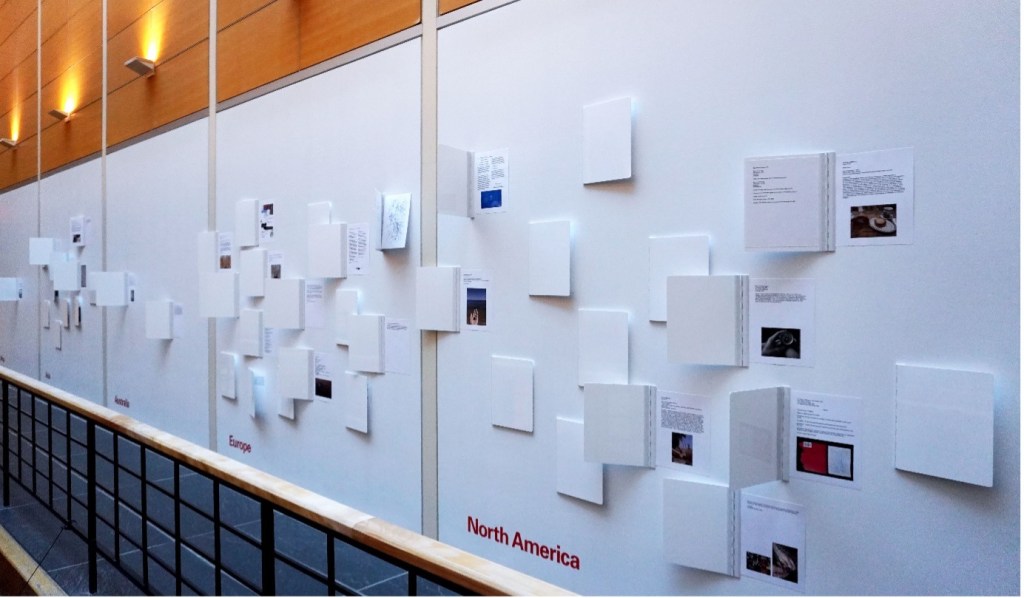
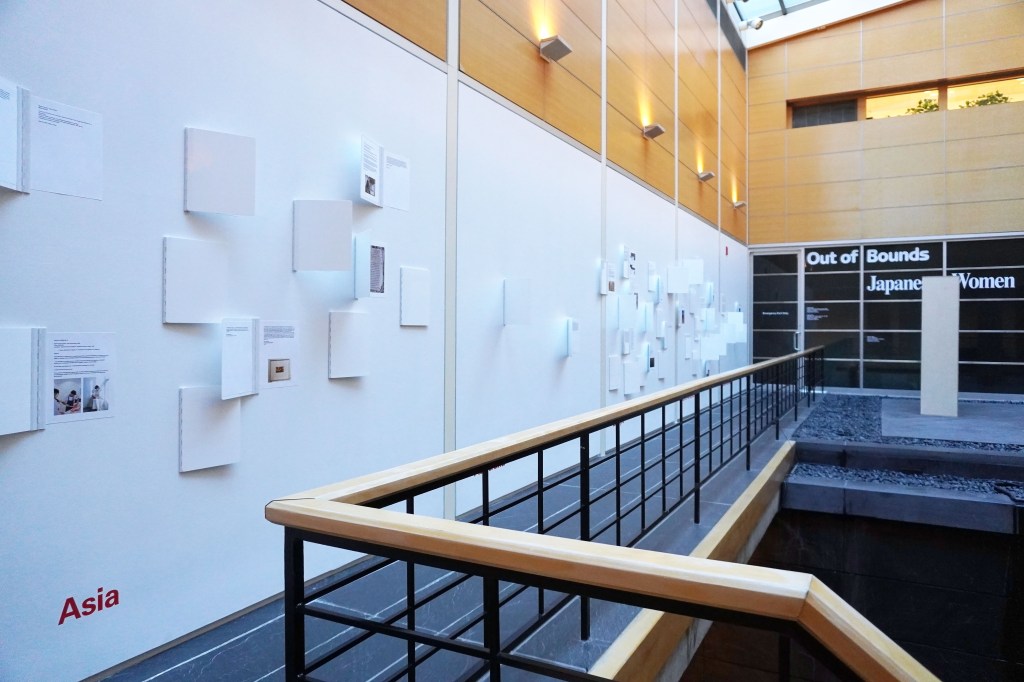
These reports were completed in 1972, but Shiomi’s Open Event was repeated at Out of Bounds: Japanese Women Artists in Fluxus, held at the Japan Society gallery in New York from October 2023 – January 2024 and curated by Midori Yoshimoto and Tiffany Lambert. Shiomi says rather than create a brand-new Spatial Poem instruction, as she did for her Moving Event in the Aichi Triennale in 2022, Yoshimoto suggested using Open Event because it signified an opening into a new era following Coronavirus-related lockdowns, and Shiomi agreed.[1]
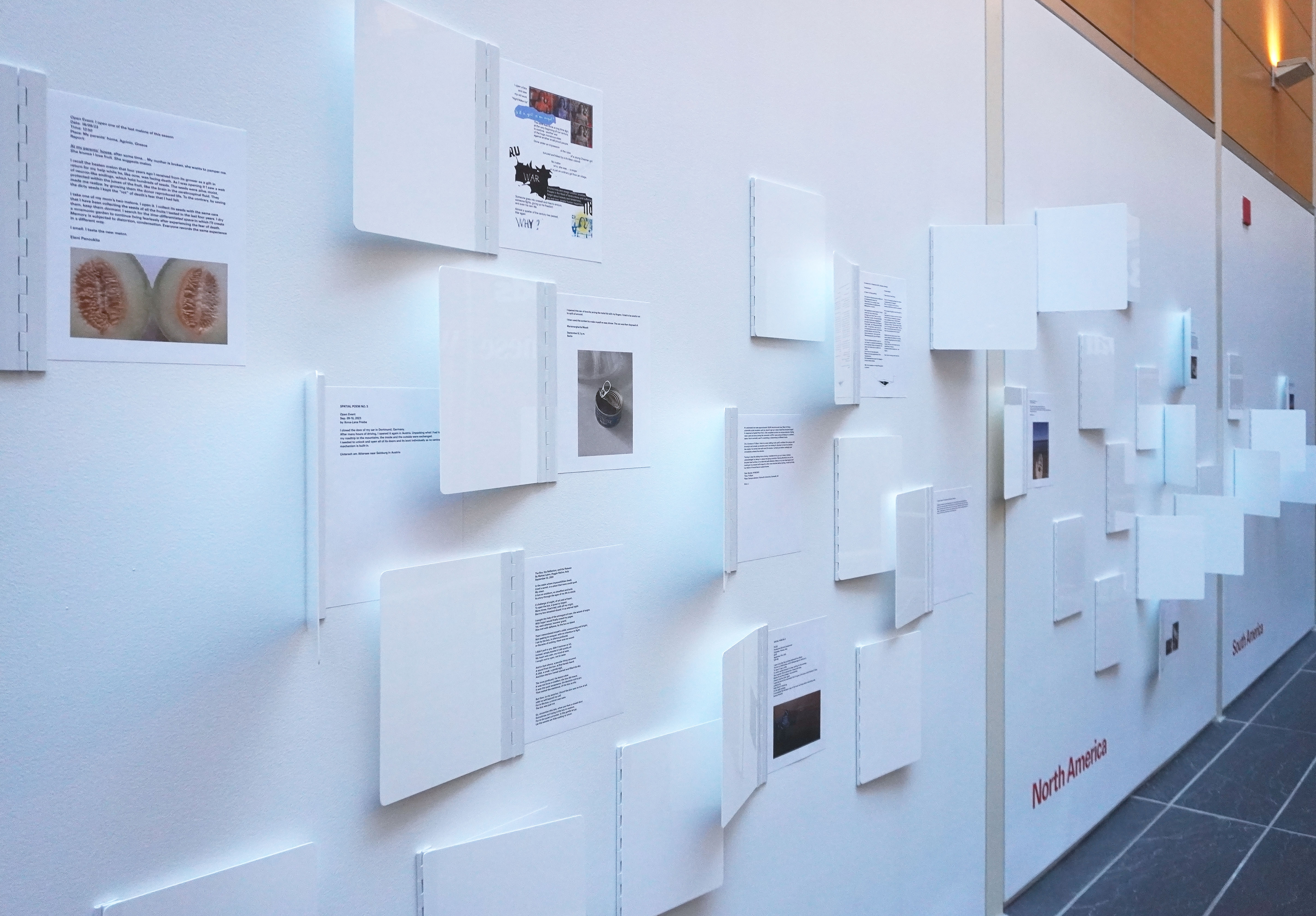
The results reflected the ease of sending photographs digitally in the 21st century as many of them included a photograph, requiring a display that would enable the images and longer texts to be shown effectively `[Fig. 3-5]. They were printed and fitted with a cover which could be opened by exhibition visitors, then placed onto a large wall, grouped into geographical areas. That visitors could open the reports, like a window, to view the results, was Shiomi’s idea as she wished for gallery-goers to perform the instruction to open something.[2]
Shiomi’s skill as a networker became evident while working on gathering the contributions. For this event, Yoshimoto’s network of artists, curators and researchers, including myself, was utilised in recommending interested participants, some residing in geographical areas not represented in the original Open Event.[3] As I assisted Yoshimoto in suggesting and contacting contributors from particular localities, I became aware of the effort, pleasure and privilege involved in sending an invitation, and receiving a unique response. In some cases, the exchange of messages went beyond merely invitation/response and resulted in some unexpected conversations and deepening of relationships. Shiomi, also, found that her network was expanded while working on Spatial Poem as participants asked their friends to join the events [4] and in-person connections were forged via the project, even decades later [5].
Email was utilised for the 2023 version, making communication quicker, as Yoshimoto points out, [6] but Shiomi’s original version relied on the postal service. She typed out each invitation one by one due to the limitations and cost related to copying technology, and this method caused each document to contain subtle differences.[7] The 2023 event could be organised much more quickly, and once the invitation text was written, it was initially sent out to fifty people over two days.[8] This post attempts to reflect some of the networking involved, by weaving in perspectives on the event from several participants.
A sense of the continuity of human experience was demonstrated over the decades since the first event in the 1970s as eyes, windows, doors and food containers were again opened. Artist Gerhard Lang is one participant who opened his eyes. Immediately before this, he had closed them, tilted his head upwards and arranged his line of vision so that when he opened them again, he saw only the sky. Keeping his sight fixed upwards without looking down at all, he drew his experience of seeing clouds. A similar process is sometimes known as ‘blind contour’ drawing, but, since, for Lang, this method is related more to seeing than to not seeing, he terms it visus signatus, or, in his translation, ‘drawn seeing’.[9]
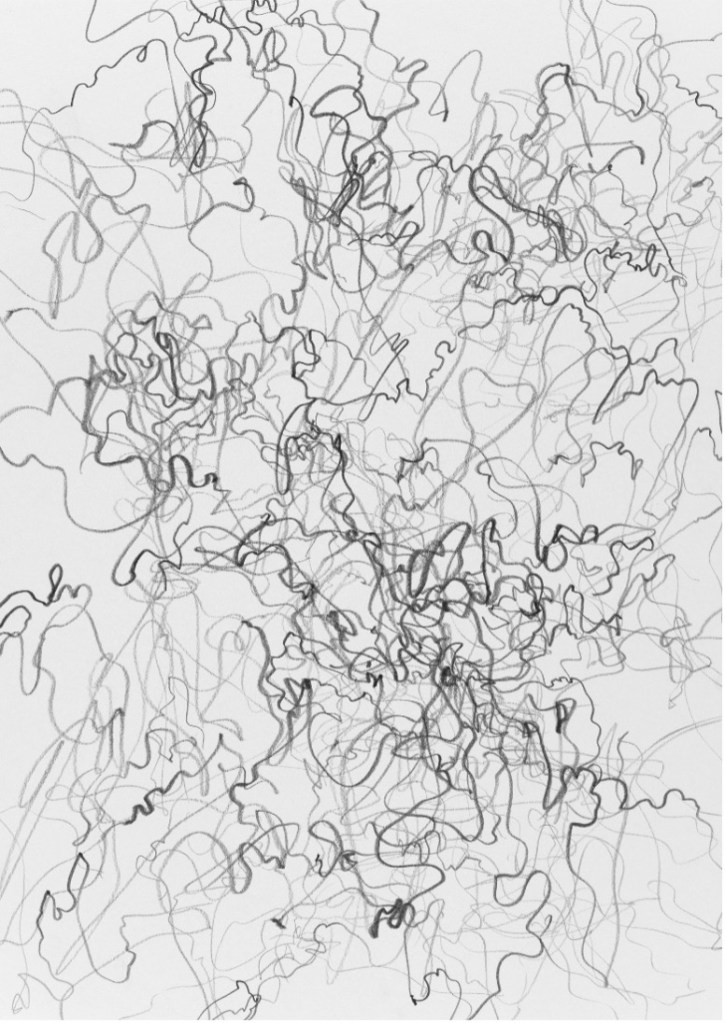
He chose to open his eyes for the event since his interest in the consideration of seeing and perception is central to his artistic practice. He also relates the opening of eyes to the idea of a ‘minimal gesture,’ which, in this case, is a small action that brings about the significant impact of allowing us to be connected to what surrounds us visually.[10]
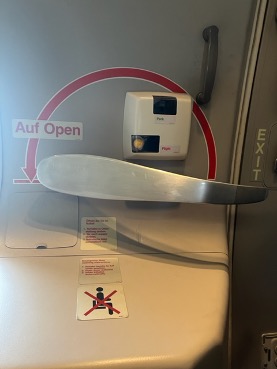
Since Lang’s action was taken directly from his artistic practice and everyday experience, choosing his Open Event response was easy and natural.[11] Another participant whose response was taken from a professional, everyday situation is curator, researcher and Activating Fluxus member, Elke Gruhn. Her response showcases her ‘double life’ as airline staff and art professional. Through Shiomi’s instruction, she transformed a main task of her life on an airline – opening the door to let passengers exit – into an artistic act.[12] She comments that although an everyday act, the opening of an aircraft door can signify ‘opening’ in the sense of bringing about new cultural and relational opportunities.[13]
Storyteller Violaine Guibert experienced a routine action being transformed into a magical encounter as she opened a box of food for Luna, a friend’s cat with a biting habit. As Guibert opened the box, she thought about Luna’s perspective in waiting for this precious kibble. In her imagination, it turned into a treasure box, and Luna was a pirate.[14] Although accustomed to transforming objects and animals in stories, Guibert recounts that through performing this event, the transformation took place spontaneously, ‘on the spot,’ for the first time.[15] She thus experienced an ‘opening’ in her professional methods parallel to the physical opening of the box.
Shiomi, in the process of breathing in the air and sunlight of her own garden, ‘opened her mind to feel bliss’.[16] Sara Seagull also opened her mind, though in her case, she decided to try AI, which she had been cautious about, in order to generate a few paragraphs of content.[17] Midori Yoshimoto’s mind was opened, in the sense that her decision to perform the opening of seeds for her two responses, caused her to become more aware of how she loves to interact with nature.[18]
Contrasting with participants who performed an everyday action, artist Dinu Li experienced an adventure of his own making by opening a lift door on Falmouth University of the Arts Campus just before midnight on a Sunday. He shut himself inside but chose not to operate the lift.[19] The use of a lift resonates with Fluxus founder George Macuinas’ response to Direction Event, Shiomi’s Spatial Poem No. 2, in 1965. Macuinas wrote that around 5.00pm on October 15, 1965, he ‘was spinning himself very rapidly in the elevator, which was going up, thus facing all directions and moving upward in New York.’ [20] Although Li was aware of Macuinas’ action, he was not thinking of it at the time he decided to enter the lift in Falmouth. Rather than concentrating on direction, he found that through the action of opening the door and closing it behind him, he was aware of being confronted by a sense of self-introspection, spontaneously asking ‘who am I?’[21] Looking into the surface of the lift’s interior, his reflection was prominent, though distorted, and, as his Open Event report testifies, he recalled Francis Bacon’s space-frames.[22]
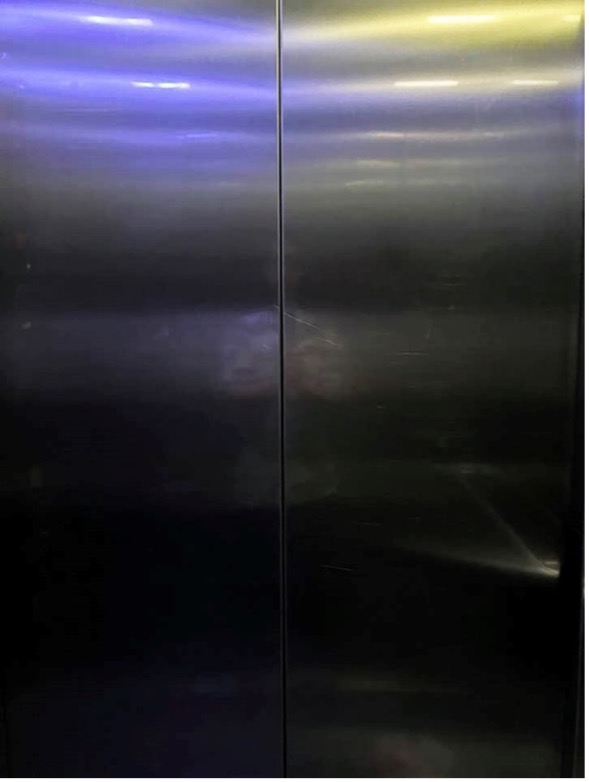
When reminded of Macuinas’ elevator-based report, Li mentioned that he found the comparison interesting due to the difference in the two localities. Since Falmouth was silent at midnight, Li wonders whether it impacted his decision to remain still, and as the environment in New York can be more energetic, he surmises that it could have influenced Maciunas’ decision to choose a frantic action. [23] This observation demonstrates how the ‘spatial’ aspect involved in Spatial Poem may inspire various reactions due to differences in environment.
Comparing results across the 1972 and 2023 realisations of this event enables us to realise how, despite our distance in time and geography, we are still humans, interlaced in a network, with much in common and many unique, individual aspects. Shiomi comments that she sees her Spatial Poems as bringing about a place where everyone exists on the same plane, performing the same kind of action, with each individuality giving brilliance to one another.[24] We are also shown how an everyday action in any time or place can be activated or transformed via Shiomi’s instruction, or we may experience how ourselves and our imaginations can be ‘opened’ in many different and similar ways by Open Event.
The compilation of reports (courtesy ‘Other Means’ design firm and the Japan Society) can be accesed here:
[1] Shiomi, email to the author, 9 April 2024; Yoshimoto, email to the author, 24 April 2024.
[2] Shiomi, email to the author, 10 April, 2024.
[3] Yoshimoto, email to the author, 24 April 2024
[4] Shiomi, 2005, p. 112.
[5] Shiomi, 2005, p. 109 – 110. On the occasion of composer György Ligeti’s 2001 visit to Kyoto, Shiomi was able to confirm that it was indeed the same György Ligeti who had participated in Spatial Poem, and they had the opportunity to converse together.
[6] Yoshimoto, email to the author, 24 April 2024.
[7] Shiomi, 2005, p. 108.
[8] Yoshimoto, email to the author, 24 April 2024.
[9] Lang, conversation with the author, 14 June 2024.
[10] Lang, email to the author, 22 April 2024.
[11] Lang, email to the author, 22 April 2024.
[12] Gruhn, Open Event report, Sept 1, 2023, 12.34pm, Singapore Changi Airport and email to the author, 8 April 2024.
[13] Gruhn, email to the author, 17 May 2024.
[14] Guibert, Open Event report, 17 September 2023, 8.17am, Voorburg, Netherlands.
[15] Guibert, email to the author, 25 April 2024.
[16] Shiomi, Open Event report, September 15, 2023, around 10am, Osaka, Japan.
[17] Seagull, Open Event report, September 6-13, 2023, Highland, New York.
[18] Yoshimoto, email to the author, 24 April 2024.
[19] Li, Open Event report, 11.55 pm, 10 September 2023.
[20] Shiomi, 1976, p. 11.
[21] Li, email to the author, 5 April 2024.
[22] Li, Open Event report.
[23] Li, email to the author, 5 April 2024.
[24] Shiomi, 2005, p. 113.
References
Gruhn, Elke, email to the author, 8 April 2024
Gruhn, Elke, email to the author, 17 May 2024
Guibert, Violaine, email to the author, 25 April, 2024
Lang, Gerhard, conversation with the author, 14 June 2024
Lang, Gerhard, email to author, 22 April 2024
Li, Dinu, email to the author, 5 April 2024
Shiomi, Mieko, Fluxus to ha Nani ka, [What is Fluxus?] (Tokyo: Film Art Sha, 2005)
Shiomi, Mieko, Spatial Poem (Osaka: [n.pub.], 1976)
Shiomi, Mieko, email to author, 9 April 2024
Shiomi, Mieko, email to author, 10 April 2024
Shiomi, Mieko, with Midori Yoshimoto, Open Event reports, displayed at Japan Society Gallery, New York, from October 2023 – January 2024
Yoshimoto, Midori, email to author, 24 April 2024
Featured photo: Installation view, Out of Bounds: Japanese Women in Fluxus, Japan Society Gallery, New York, from October 2023 – January 2024. Image by Stefanie Oh.
 Activating Fluxus